Frame-by-Frame vs Modular Animation for 2D Game Characters
Published:
When animating 2D game characters, developers often choose between two main approaches: frame-by-frame animation and modular (cutout) animation. Both methods are valid, but they come with very different strengths and weaknesses depending on the style and needs of your game.
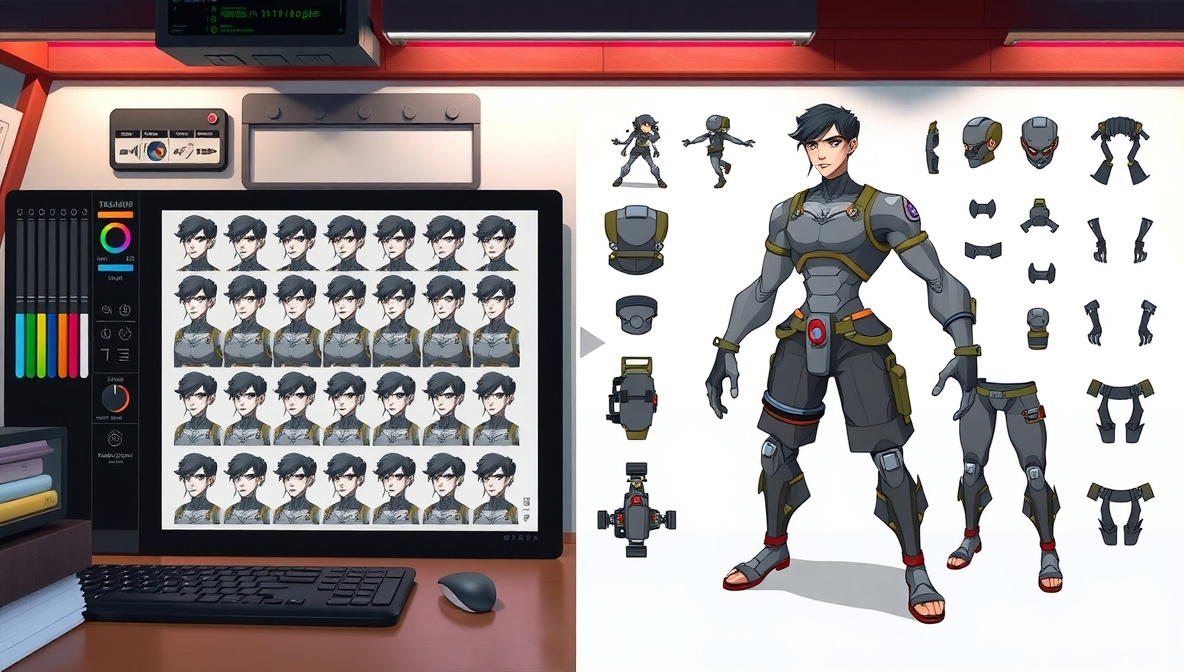
Frame-by-frame animation redraws every frame of movement, while modular animation reuses separate body parts (head, arms, legs, torso) and moves them procedurally or with bones.
Benefits of Frame-by-Frame Animation
Expressive: Every frame can be hand-crafted, giving characters unique personality and emotion.
Perfect for pixel art: Small, detailed animations look natural when drawn frame by frame.
Artistic freedom: Allows exaggerated poses, stretching, and effects that modular animation can’t easily achieve.
Benefits of Modular Animation
Lightweight: Reuses body parts instead of storing dozens of animation frames.
Flexible: Easy to change equipment, swap outfits, or reuse animations across characters.
Smooth: Rotation and scaling can create fluid motion without redrawing every frame.
Downsides of Frame-by-Frame
Heavy workload: Requires redrawing every single frame for every animation.
Larger file sizes: Dozens of frames take more storage and memory.
Harder to update: Changing a single design means redoing multiple frames.
Downsides of Modular Animation
Can look stiff: Without careful posing, characters may feel mechanical.
Setup time: Requires precise pivot points and joint placement.
Artifacts: Gaps or unnatural bends may appear at joints if not designed well.
Which Should You Choose?
If your game relies on unique, expressive characters or uses pixel art, frame-by-frame animation may be the best fit. If you need flexibility, smooth procedural movement, or want to save time and memory, modular animation is a strong option.
In fact, many developers mix both methods: using modular animation for the main movement and frame-by-frame effects for details like sword slashes, dust clouds, or facial expressions. The right choice depends on the style and technical goals of your project.